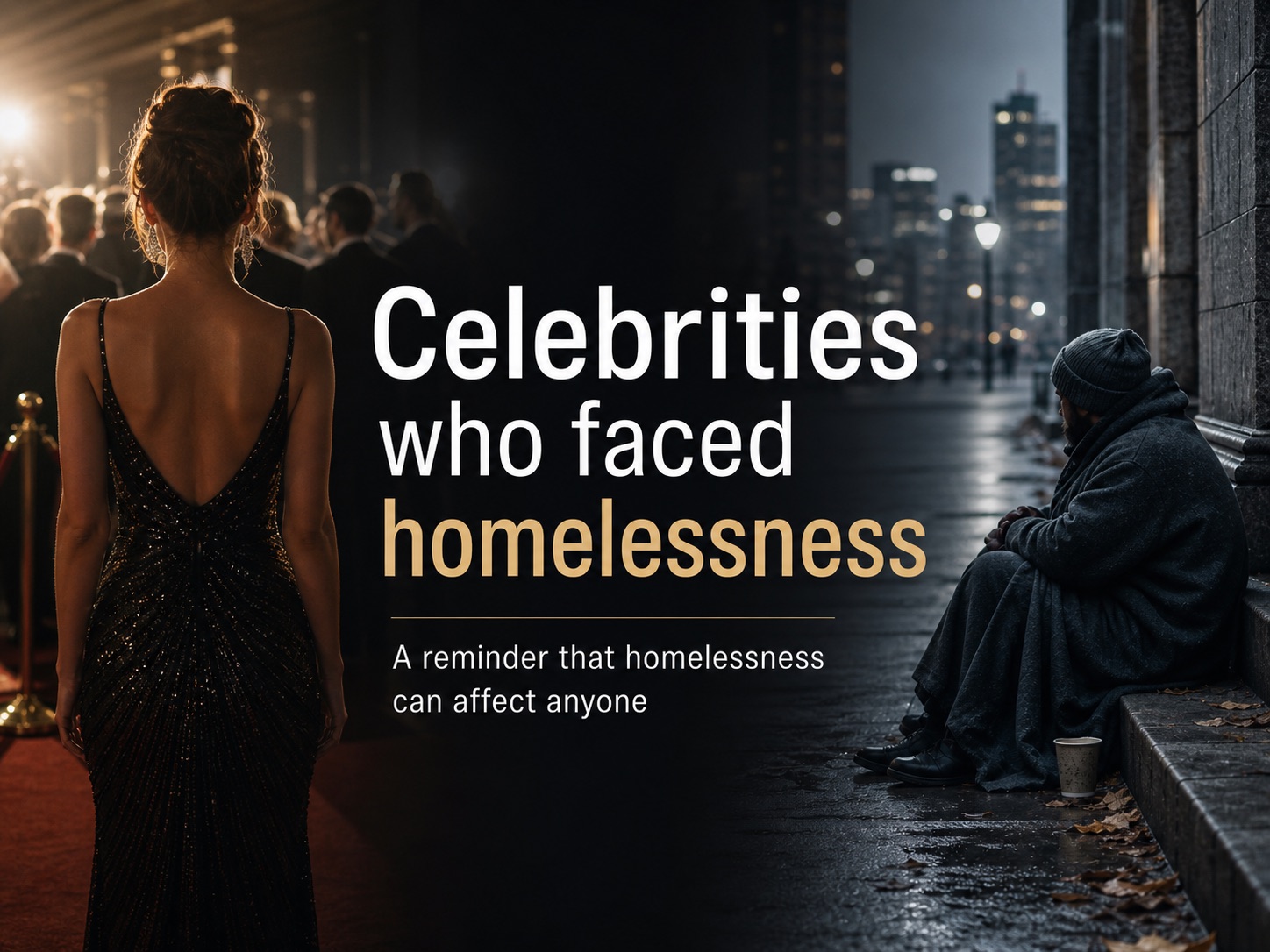
Famous Faces, Hidden Hardship: When Homelessness Touches the Unexpected
Homelessness is often talked about as though it only happens to a certain kind of person.
That idea is deeply misleading.
In reality, homelessness can follow job loss, family breakdown, poor health, domestic abuse, rising rents, addiction, trauma, or simply running out of options. It can affect people quietly, suddenly, and in ways that do not always fit the stereotype most people picture.
One useful way to challenge that stereotype is to look at the stories of public figures who have spoken openly about their own experiences. Not because celebrity hardship is more important than anyone else's, but because it helps make one point very clear: homelessness is not a distant issue that only happens to "other people".
It is a human reality that can touch people from all kinds of backgrounds, including some of the most recognisable names in the world.
Why these stories matter
There is a right way and a wrong way to talk about celebrity experiences of homelessness.
The wrong way is to turn them into tidy success stories, as if homelessness is just a dramatic first chapter before a happy ending. That does a disservice to the millions of people who experience homelessness without fame, wealth, connections, or a safety net arriving later.
The better way is to treat these stories as reminders of how fragile stability can be, and how important it is that support exists early, practically, and without judgment.
Public figures who have spoken about homelessness
Halle Berry
Before she became an Oscar-winning actor, Halle Berry has spoken about staying in a homeless shelter in New York after running out of money while trying to establish herself. It is a stark reminder that homelessness can sit just a few missed pay cheques away, even for people we later think of as untouchably successful.
Jewel
Singer-songwriter Jewel has spoken publicly about living in her car when she was younger. Her story is often told as one of resilience, but what stands out more is how quickly work insecurity, lack of money, and lack of support can leave someone without a safe place to stay.
Tyler Perry
Tyler Perry has spoken about periods of homelessness before building his career. His experience shows how people can be talented, driven, and determined, and still find themselves without secure housing. Homelessness is not evidence of personal failure.
Chris Gardner
Chris Gardner's story is one of the best known, partly because it was later adapted into film. The detail that tends to stay with people is not eventual success, but the reality that he and his young son were homeless for around a year, relying on shelters and other improvised places to sleep while he tried to keep working.
John Bird
Closer to home, Big Issue founder John Bird has long spoken about his own experiences of poverty, homelessness, rough sleeping, and institutional life. His story matters because it links lived experience directly to public action. It is not just about surviving hardship, but about understanding the systems that leave people there.
The bigger lesson is not fame - it is vulnerability
These stories are compelling because the names are familiar. But the real lesson has nothing to do with celebrity.
The real lesson is that homelessness is often closer than people think.
Someone can be skilled, ambitious, talented, hardworking, and still end up in a shelter, in a car, on a friend's sofa, or without any safe place to go. For many people, homelessness is not caused by one dramatic event. It is the end result of pressure building faster than support arrives.
That is one of the reasons supported housing, homelessness prevention, and responsive frontline services matter so much. Good services do not wait for somebody to become a headline or a crisis. They create stability before things worsen.
Why language matters
It is also worth being precise.
Homelessness does not look the same for everyone. For one person, it may mean rough sleeping. For another, it may mean living in temporary accommodation, sofa surfing, staying in a hostel, or sleeping in a car. Each of those experiences brings its own risks, stresses, and forms of invisibility.
That is part of why the public sometimes underestimates the scale of homelessness. If people only recognise rough sleeping as "real" homelessness, they miss the many thousands of people already living in deeply unstable conditions.
What we should take from this
If the experiences of public figures teach us anything useful, it is not that homelessness can be overcome through grit alone.
It is that homelessness is a serious housing and support issue that can affect people in unexpected ways, and that the right intervention at the right time matters enormously.
For those working in supported housing and homelessness services, that will not be a surprising conclusion. But for the wider public, these stories can still help cut through damaging assumptions.
Homelessness is not a niche issue. It is not someone else's problem. And it is not always visible.
If you or someone you know needs support
If homelessness is a current risk rather than a topic of interest, practical help is available.
- Shelter: housing advice and homelessness help in England - england.shelter.org.uk/get_help
- Crisis: advice and links to homelessness services - crisis.org.uk/get-help
- Centrepoint: support for young people facing homelessness - centrepoint.org.uk/do-you-need-help
- St Mungo's: homelessness and rough sleeping support - mungos.org/get-help
- Homeless Link: service directory and homelessness support information - homeless.org.uk
- GOV.UK: official guidance if you are homeless or at risk - gov.uk/if-youre-homeless-at-risk-of-homelessness
- NHS urgent mental health support: if someone is in immediate mental health distress - nhs.uk/.../where-to-get-urgent-help-for-mental-health
If someone is in immediate danger, call 999.